Frequently Asked Questions
We know choosing food for your family comes with questions — and we believe you deserve clear, honest answers. This FAQ section was created to give you a transparent look at how we raise, feed, and care for our birds, as well as what to expect when purchasing from our farm. If you’re curious about our practices, processing, or policies, you’re in the right place. And if you don’t see your question here, we’re always happy to chat — just reach out!
Do you use mRNA vaccines on your chickens?
No — we do not use mRNA vaccines on our birds. We’re committed to raising poultry with practices that align with transparency, consumer preference, and our own standards for responsible animal care. Our focus is on pasture-based management, clean feed, and proactive flock health, so we don’t rely on unnecessary interventions.
It may also be reassuring to know that, as of now, no mRNA vaccines are approved for use in poultry in the United States. The vaccines currently available for poultry are traditional, well-established types that have been used in the industry for decades. Should approval standards ever change in the future, we will continue to evaluate them through the lens of what is safest, most natural, and most aligned with our farm’s values — but at this time, mRNA vaccines are simply not part of poultry production in the U.S., and they are not used on our farm.
What sanitizers are used during processing?
We partner with a USDA-inspected poultry processor to ensure our chicken is handled with the highest standards of food safety. During processing, they use peracetic acid (PAA) as the antimicrobial rinse — not chlorine bleach. PAA is widely used in organic-compliant poultry processing and is known for being effective, food-safe, and residue-free. It is essentially a blend of hydrogen peroxide and acetic acid (the same natural acid found in vinegar), which breaks down quickly after use.
We know customers care about what comes into contact with their food, and we do too. One of the reasons PAA is preferred over chlorine is because it leaves no chemical aftertaste, chlorine odor, or residues. It breaks down into simple components like water, oxygen, and vinegar-like compounds, making it a cleaner and more natural-leaning alternative to chlorine-based washes. By choosing a USDA-inspected processor that uses PAA, we can offer chicken that meets strict safety standards without the use of chlorine bleach.
Is your chicken certified organic?
While our farm is not currently certified organic, we do feed our chickens certified organic feed. This means their diet meets strict organic standards—free from GMOs, synthetic pesticides, herbicides, and animal by-products. We choose organic feed because it aligns with our values and supports the clean, high-integrity food our customers expect from us.
At this stage in our growth, pursuing full USDA Organic certification would require a significant investment of time, record-keeping, and financial resources that simply isn’t practical at our current scale. Rather than increase our prices to cover that overhead, we’ve chosen to prioritize farming practices that matter most for bird health, soil health, and food quality. As we grow, we’ll continue to evaluate whether certification makes sense, but for now, we’re committed to organic feed and transparent practices—without the added cost of the label.
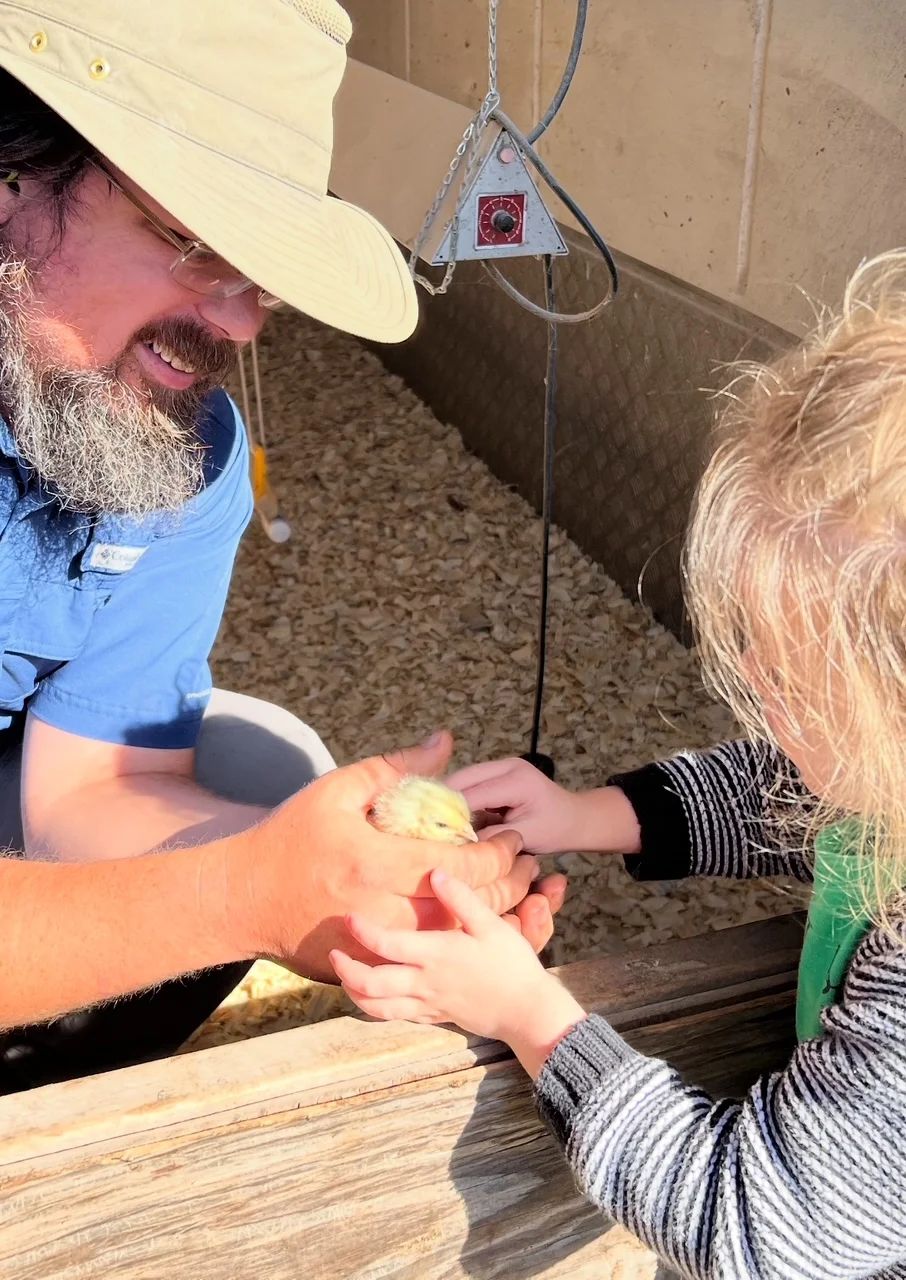
Where do your chicks come from?
We purchase our chicks from a reputable hatchery in East Texas that aligns with our standards for animal welfare and quality. While most hatcheries ship day-old chicks through the USPS mail system, we take a more hands-on approach. Our chicks are never shipped or placed into the freight or postal network. Instead, they are hand-delivered to us at a scheduled pickup location and brought straight back to the farm by our own staff.
This extra effort makes a meaningful difference in chick health and comfort. By avoiding the stress of shipping, long transit times, and temperature fluctuations, we experience significantly fewer health issues and give our chicks the best possible start. This approach helps them settle in quickly, begin eating and drinking sooner, and supports stronger early development — all of which contribute to healthier, more resilient birds throughout their life on pasture.

